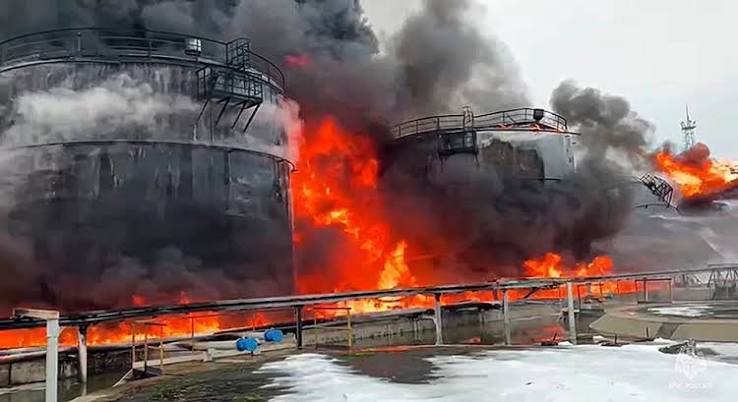
Stage 1: Summary
Ukraine has struck a major oil terminal in Russia’s St. Petersburg, according to Ukrainian President Volodymyr Zelensky, who described it as vital infrastructure for Russia’s war effort. The attack, which also targeted a key Russian naval base in Kronstadt, caused significant damage and fuel shortages in Russia. Ukraine claims nearly 43% of Russia’s oil refining capacity is now disabled.
The incident comes amid intensified Ukrainian drone attacks on energy facilities, contributing to widespread disruptions. Russia has not publicly confirmed the damage, but the Kremlin has denied full control over Kostyantynivka, a key eastern town. Both sides are reportedly seeking to gain strategic advantage ahead of an upcoming NATO summit.
Stage 2: Future Extrapolation
The likely future of this story centers around escalating energy warfare in Eastern Europe, with significant geopolitical and economic ramifications. Based on the current trajectory and historical context, several key trends and outcomes can be anticipated:
### 1. **Escalation of Energy Warfare**
- **Strategic Targeting Continues:** Ukraine’s attacks on critical infrastructure—such as oil terminals and naval bases—suggest a deliberate strategy to weaken Russia’s energy resilience. This could lead to further intensification of drone and missile strikes on energy facilities, aiming to disrupt supply chains and force concessions.
- **NATO’s Strategic Response:** The upcoming NATO summit will likely see increased pressure on Russia to de-escalate or negotiate, especially if the attacks continue to impact global energy markets. Ukraine may push for stronger sanctions or military support from Western allies.
### 2. **Energy Market Disruptions**
- **Global Oil Prices Volatility:** With nearly 43% of Russia’s refining capacity disabled, disruptions in Russian oil exports could lead to sharp increases in global oil prices. This would disproportionately affect energy-dependent economies, particularly in Europe.
- **Shift in Energy Alliances:** Countries like Germany and others may accelerate their transition to renewable energy or deepen partnerships with the U.S. and other non-Russian suppliers to reduce dependency on Russian oil.
### 3. **Diplomatic Tensions and Escalation Risks**
- **Increased NATO-Russia Tensions:** The attack on St. Petersburg and the denial of control over Kostyantynivka could heighten mistrust between NATO and Russia, potentially leading to more aggressive posturing or even direct military confrontations.
- **International Mediation Efforts:** There may be increased calls for international mediation, especially if the attacks threaten global energy security. The EU, G7, or UN could play a mediating role.
### 4. **Domestic Implications in Russia**
- **Government Response and Public Sentiment:** The Russian government may face internal pressure to justify the attacks as necessary defense measures, potentially consolidating support among nationalist factions. Conversely, prolonged instability could weaken public confidence.
- **Economic Impact on Russia:** Reduced oil revenues and disrupted exports could strain Russia’s economy, especially if sanctions are tightened further or alternative markets are not fully secured.
### 5. **Long-Term Strategic Shifts**
- **Energy Infrastructure Hardening:** Both sides may invest heavily in protecting energy infrastructure against future attacks, leading to increased militarization of critical facilities.
- **Renewable Energy Acceleration:** The crisis could accelerate global efforts to transition away from fossil fuels, with Russia and Ukraine both facing pressure to adapt or risk further isolation.
### Conclusion
The story is likely to evolve into a high-stakes geopolitical standoff, with energy security at its core. The outcome will depend on the balance of military action, diplomatic engagement, and economic resilience. If tensions persist, the conflict could spiral into a broader confrontation, reshaping global energy dynamics and alliances for years to come.
**Reasoned Extrapolation:** The current events signal a turning point in the war of attrition over energy resources. The next phase will hinge on whether Ukraine can sustain its offensive momentum or if Russia’s strategic depth allows it to recover and counterattack. The international community’s response will determine whether this becomes a localized conflict or a catalyst for broader geopolitical realignment.